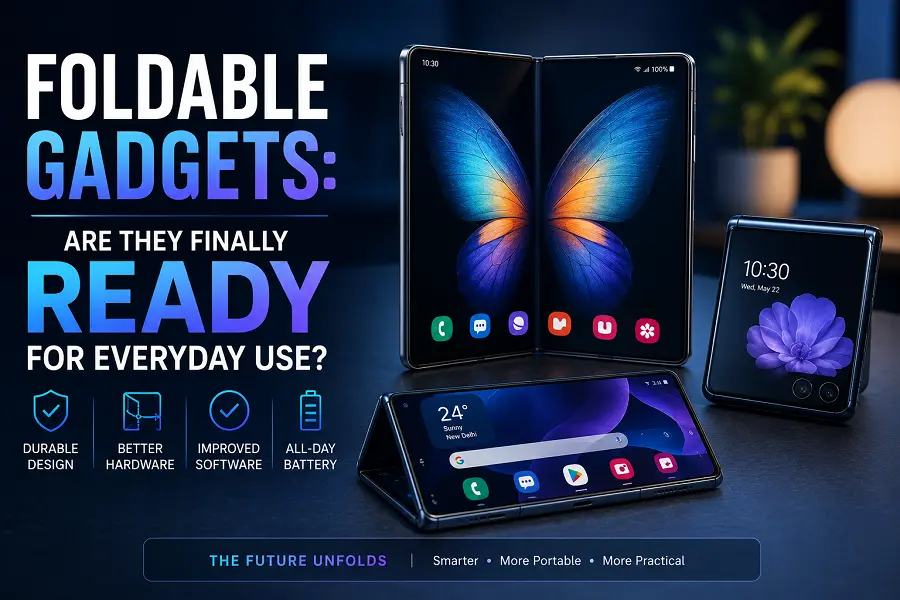
Foldable gadgets have evolved from eye-catching concepts into practical devices that many people now consider for daily use. From foldable smartphones to compact laptops, manufacturers have improved durability, software, and overall performance. While early models faced concerns about fragile screens and visible creases, newer generations offer a much more refined experience. The real question is no longer whether foldable technology works, but whether it fits everyday lifestyles. The answer depends on how you use your devices and what features matter most to you.
Why Foldable Gadgets Are Becoming More Practical
Modern foldable devices offer advantages that standard smartphones and tablets cannot easily match.
One of the biggest improvements is hinge technology. Manufacturers have designed stronger hinges that open and close smoothly while reducing wear over time. Better materials also help protect flexible displays from scratches and accidental damage.
Another important upgrade is software optimization. Many apps now automatically adjust when a screen changes size, allowing users to continue working without interruption. Split-screen multitasking has become faster and more intuitive.
Battery life has also improved thanks to efficient processors and smarter power management. Many foldable devices now comfortably last through a full workday under normal use.
Key benefits include:
- Larger display without carrying a bigger device.
- Better multitasking for work and entertainment.
- Easier reading, gaming, and video streaming.
- Improved portability compared to tablets.
- More durable designs than early foldable models.
- Better app compatibility with flexible screens.
Factors to Consider Before Buying a Foldable Device
Choosing a foldable gadget requires looking beyond its innovative design.
1. Daily Usage
Think about how you normally use your device. If you frequently read documents, edit files, attend video meetings, or multitask, a foldable screen offers noticeable convenience. Casual users may not experience the same level of benefit.
2. Durability
Although foldable devices are much stronger than before, flexible displays still require more careful handling than traditional glass screens. Using protective cases and avoiding excessive pressure helps extend their lifespan.
3. Price
Foldable gadgets usually cost more than comparable non-folding devices. Buyers should decide whether the larger screen and flexible design justify the additional investment.
4. Portability
Many foldable smartphones fit comfortably into pockets while opening into tablet-sized displays. This balance between compact storage and expanded workspace appeals to travelers and professionals.
5. Software Experience
Not every application fully supports foldable displays. Before purchasing, ensure that the apps you use most frequently work well with larger or changing screen sizes.
Are Foldable Gadgets Worth Using Every Day?
Foldable technology has matured significantly, making it suitable for many users. Business professionals benefit from improved productivity through multitasking. Students enjoy reading digital textbooks and taking notes on larger displays without carrying multiple devices. Travelers appreciate having a compact device that expands for navigation, entertainment, or work.
However, foldables are not automatically the best choice for everyone. People who prioritize maximum durability, lower costs, or simple everyday communication may find traditional smartphones more practical.
For users who value flexibility, larger screens, and portable productivity, today’s foldable gadgets deliver a far better experience than previous generations. Their reliability has improved enough for regular daily use, although careful handling remains advisable.
Conclusion
Foldable gadgets have reached a stage where they can confidently serve as everyday devices for many users. Better hinges, stronger materials, optimized software, and improved battery life have solved many of the issues that affected earlier models. While premium pricing and long-term durability remain considerations, foldable technology now offers genuine practical value instead of simply showcasing innovation. If your daily routine benefits from a larger display without sacrificing portability, a foldable device is now a realistic and worthwhile option.
FAQs
1. Are foldable gadgets durable enough for daily use?
Yes. Current models are much more durable than earlier versions, although they still benefit from careful handling and protective accessories.
2. Do foldable phones have a visible screen crease?
Most foldable phones still have a slight crease, but it is less noticeable during normal use and rarely affects everyday tasks.
3. Is a foldable device better than a regular smartphone?
It depends on your needs. Foldable devices are ideal for multitasking, reading, and entertainment, while regular smartphones often offer better value and simplicity.
4. Can foldable gadgets replace tablets?
For many users, yes. A foldable phone provides a larger display when opened, making it suitable for reading, video streaming, and light productivity tasks.
5. Should first-time buyers choose a foldable gadget?
If you want enhanced multitasking, portability, and a larger screen experience, today’s foldable gadgets are mature enough to be a strong first purchase.