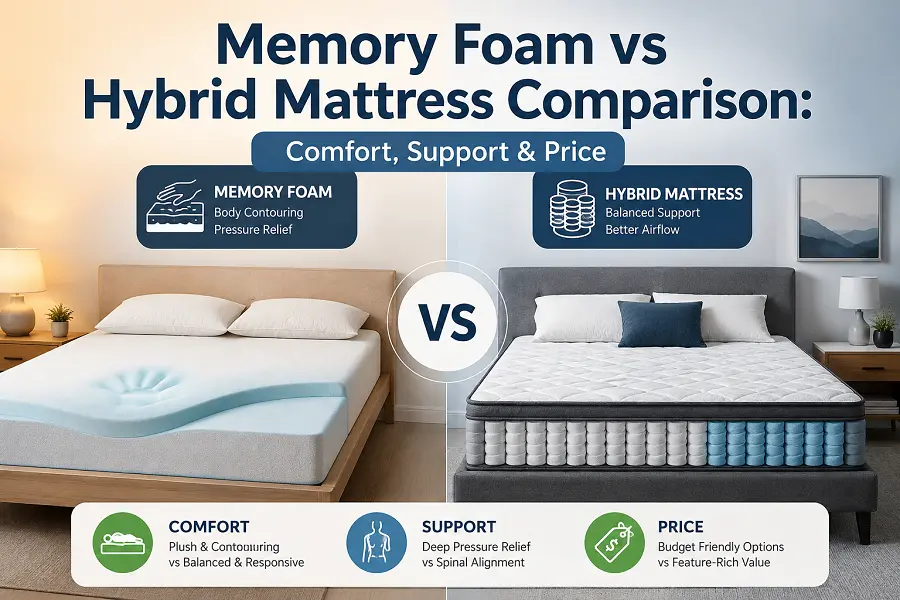
So, Which One Actually Wins — Memory Foam or Hybrid?
Short answer: it depends on how you sleep, how hot you run at night, and what your back has been complaining about lately. There isn’t a universal winner here, and honestly, anyone who tells you there is probably hasn’t slept on both for a few weeks straight.
I’ve had both types in my house at different points — a memory foam mattress for about four years, then a hybrid after my old one started sagging in the middle. The difference was noticeable within the first week. If you’re short on time and just want the gist: memory foam hugs your body and isolates motion really well, but it can sleep warm. Hybrids give you that spring-back bounce with better airflow, but they cost more and transfer a bit more motion across the bed.
If you want the full picture — including where each one falls short — keep reading. I’ll also drop in a comparison table you can screenshot or bookmark.
Quick Comparison Table
| Feature | Memory Foam Mattress | Hybrid Mattress |
|---|---|---|
| Construction | All-foam layers, no coils | Pocket coils/innerspring + foam or latex top layer |
| Motion Isolation | Excellent | Good, not as isolated |
| Body Contouring | Deep, close hug | Moderate, more “on the bed” feel |
| Sleep Temperature | Runs warmer | Sleeps cooler, better airflow |
| Bounce | Minimal, slow response | Springy, more responsive |
| Edge Support | Weaker | Stronger |
| Average Lifespan | 6–8 years | 7–10 years |
| Price | Lower | Higher, sometimes 20–40% more |
| Best For | Side sleepers, couples wanting quiet nights | Back/stomach sleepers, hot sleepers, combo sleepers |
Keep this table handy if you’re comparing listings online — most mattress sites won’t lay it out this plainly because, well, it doesn’t always favor their premium hybrid models.
What Memory Foam Actually Feels Like (Not the Marketing Version)
Memory foam gets sold as this cloud-like, weightless experience. In reality, it’s more like sinking into something that slowly molds around you — which some people love and others find claustrophobic. If you’ve ever pressed your hand into a foam mattress and watched the indent slowly disappear, that’s the viscoelastic reaction doing its job.
Where it really shines is motion isolation. My partner used to wake up every time I got up for water at 2 AM on our old spring mattress. Switch to memory foam, and that stopped almost completely. If you share a bed with a restless sleeper — or a dog that likes to jump up at odd hours — this alone might settle the decision for you.
The catch? Heat retention. Traditional memory foam traps body heat because it’s dense and doesn’t allow much airflow. Newer gel-infused or open-cell foams have improved this, but they still don’t match a hybrid’s breathability. If you already sleep hot, this is worth taking seriously before you buy.
What Makes a Hybrid Different
A hybrid mattress is basically the middle ground — pocketed coils for support and bounce, topped with a layer of foam or latex for comfort. You get some of that contouring feel from the foam, but the coil base underneath keeps air moving and gives the mattress more responsiveness.
People who sleep on their back or stomach often prefer hybrids because the coil layer prevents that “sinking too deep” feeling that can throw your spine out of alignment. It’s also a better pick if you or your partner shift positions a lot through the night, since the coils respond faster than slow-recovery foam.
The trade-off is price. Hybrids typically cost more because they combine two manufacturing processes — coil assembly plus foam layering. You’re also looking at slightly more motion transfer, though good pocket-coil designs have narrowed this gap a lot compared to old-school innerspring beds.
Comfort and Support: The Real Difference
Comfort is subjective, but support is more measurable. Memory foam offers a “hug” — it distributes weight evenly, which is genuinely helpful for pressure points like hips and shoulders, especially for side sleepers. Hybrids offer more structured support, which tends to benefit heavier body types or people managing lower back pain who need a firmer response rather than a slow foam sink.
Here’s a practical way to think about it: if you fall asleep on your side and stay there most of the night, memory foam will likely feel better on your joints. If you toss between your back and stomach, or you’re above 200 lbs, a hybrid usually holds up better over time without that middle-of-the-bed dip.
Price: What You’re Actually Paying For
Memory foam mattresses generally sit in a lower price bracket because production is simpler — it’s foam layers stacked and compressed. Entry-level queen memory foam mattresses often start lower than comparable hybrids.
Hybrids cost more because you’re paying for two systems working together — a coil unit and a foam or latex comfort layer. That said, many hybrid buyers report the extra cost pays off in durability; coils tend to hold their shape longer than foam, which sags with repeated pressure over the years.
If budget is tight, memory foam gets you solid comfort without breaking the bank. If you’re planning to keep the mattress for 8–10 years and don’t want to deal with sagging, the higher upfront hybrid cost may work out cheaper per year of use.
A Quick Reality Check on Durability
Neither mattress type is “forever.” Memory foam softens over time, particularly in the areas you sleep on most — you’ll notice a slight body impression forming after a few years, which is normal wear, not necessarily a defect. Hybrids resist this a bit better because the coils maintain structure, but the foam comfort layer on top will still compress eventually.
Rotating your mattress every few months (head to foot) helps both types last longer. It’s a small habit that a lot of people skip, and it genuinely extends the life of either mattress by spreading out wear more evenly.
So, Which Should You Buy?
If you want deep pressure relief, sleep mostly on your side, and don’t mind paying less for something softer — memory foam is a solid, budget-friendly choice. If you sleep hot, need firmer support, or share a bed and want the mattress to respond quickly when either of you moves, a hybrid is worth the extra cost.
There’s no universally “better” mattress here — just the one that matches how your body actually sleeps.
Frequently Asked Questions
1. Which is better for back pain — memory foam or hybrid?
Hybrids generally offer more targeted support for back pain because the coil layer prevents excessive sinking, which helps keep the spine aligned. Memory foam can help too, especially for side sleepers, but very soft foam can sometimes worsen lower back discomfort for stomach sleepers.
2. Do hybrid mattresses sleep cooler than memory foam?
Yes, in most cases. The coil layer in hybrids allows air to circulate through the mattress, reducing heat buildup. Pure memory foam tends to trap body heat unless it’s specifically designed with cooling gel or open-cell technology.
3. Is memory foam or hybrid better for couples?
Memory foam wins on motion isolation, so it’s better if one partner is a restless sleeper. Hybrids offer a livelier surface that some couples prefer for ease of movement, though modern pocket coils have reduced the motion transfer gap.
4. How long does a hybrid mattress usually last?
Most quality hybrid mattresses last around 7 to 10 years, depending on coil gauge and foam density. Regular rotation and a supportive bed frame can extend this lifespan further.
5. Is a memory foam mattress bad for your back?
Not inherently — it depends on firmness and your sleep position. Medium-firm memory foam works well for side sleepers, but very soft memory foam can cause the hips to sink too deep for back or stomach sleepers.
6. Are hybrid mattresses worth the extra price?
For many sleepers, yes, especially if you value durability, cooling, and stronger edge support. If budget is the priority and you’re a side sleeper without heat issues, memory foam offers solid value at a lower cost.
7. Can I find a good memory foam mattress on sale?
Yes, memory foam mattresses go on sale frequently, especially around major shopping seasons. Comparing certified foam density (look for CertiPUR-US certification) matters more than chasing the lowest price alone.
8. What’s the average price difference between memory foam and hybrid mattresses?
Hybrids typically cost 20-40% more than comparable memory foam mattresses at the same size and quality tier, mainly due to the additional coil manufacturing process.
9. Do hybrid mattresses have better edge support than memory foam?
Yes. The coil perimeter in most hybrid designs reinforces the edges, making it easier to sit on the side of the bed or sleep near the edge without feeling like you’ll roll off — something pure foam mattresses struggle with.
10. Which mattress type is better for heavier body types?
Hybrids tend to perform better for heavier individuals because the coil support system resists excessive sinking and maintains shape longer under higher weight loads.
11. Is innerspring the same as hybrid?
No. Innerspring mattresses use coils with a thin comfort layer (often just quilted fabric), while hybrids combine coils with a thicker, more substantial foam or latex comfort layer for better pressure relief.
12. How do I know if a mattress will sleep hot before buying?
Check for cooling features like gel infusion, open-cell foam, or breathable covers. Reading verified buyer reviews mentioning temperature, rather than just brand marketing claims, gives a more honest picture.
13. What’s the best mattress type for side sleepers specifically?
Memory foam is generally the top pick for side sleepers because it cushions the shoulders and hips, reducing pressure point discomfort. A medium-soft hybrid with a thick foam top layer can also work well.
14. Do memory foam mattresses have a strong smell when new?
Some do, due to off-gassing from the manufacturing process. This usually fades within a few days to two weeks if the mattress is aired out in a well-ventilated room.
15. Should I choose based on price or comfort first?
Comfort and support should come first since a mattress affects your sleep quality every night for years. Once you know which type suits your sleep position and temperature needs, then compare prices across brands offering that type.