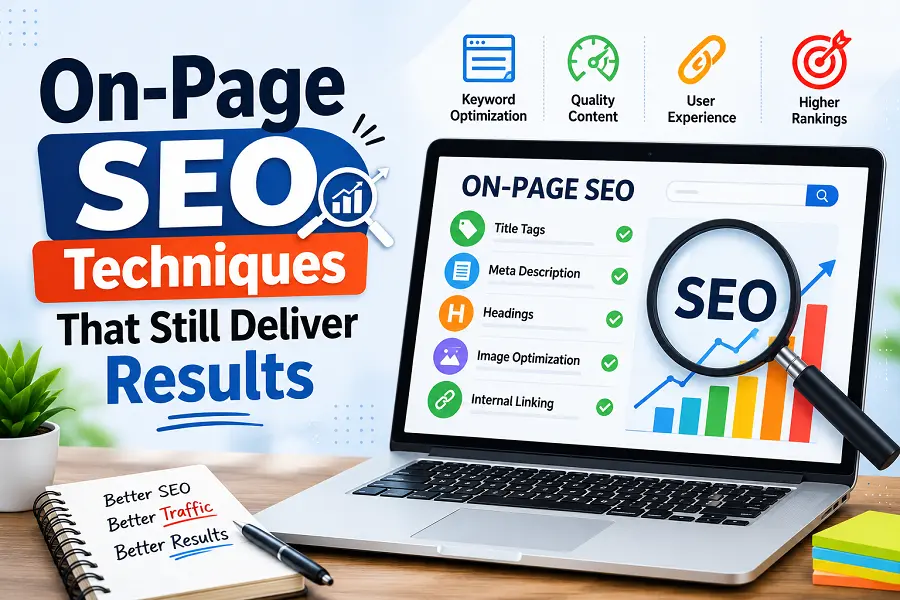
Search engines continue to evolve, but strong on-page SEO remains the foundation of sustainable organic growth. While algorithms now evaluate content quality, user satisfaction, and page experience more intelligently, the basics of optimizing a webpage are still highly effective when done correctly. The goal is no longer to add keywords everywhere—it’s to create pages that answer search intent clearly, load quickly, and provide a great experience from start to finish.
H2: Create Content That Matches Search Intent
Every successful page begins with understanding what users expect to find. If someone searches for a guide, they want detailed explanations. If they search for a product, they expect specifications, pricing, or comparisons. Matching intent increases engagement and improves the likelihood of ranking.
Focus on writing content that solves a specific problem instead of covering unrelated topics. Organize information with clear headings so readers can quickly find answers.
Best practices include:
- Target one primary topic per page.
- Use descriptive headings and subheadings.
- Naturally include related semantic keywords.
- Write concise paragraphs for easier reading.
- Answer common questions within the content.
- Keep information accurate and up to date.
- Remove outdated or duplicated sections regularly.
H2: Optimize Every Page Element for Better Visibility
Even excellent content can struggle if important page elements are ignored. Search engines use titles, URLs, headings, and internal links to understand page relevance.
Follow these optimization steps:
- Write a compelling title tag that includes the primary keyword naturally.
- Create a clear meta description that encourages users to click.
- Use short, readable URLs without unnecessary numbers or symbols.
- Include only one H1 heading and organize remaining content with logical H2 and H3 headings.
- Add descriptive alt text to images for accessibility and image search.
- Link to relevant pages within your website to help users discover related content.
- Compress images and improve page speed to reduce loading times.
- Ensure the page displays properly on mobile devices.
- Use structured formatting with bullet points and numbered lists where appropriate.
- Review pages regularly to keep information fresh and accurate.
H2: Improve User Experience to Strengthen SEO Performance
User experience has become closely connected with search visibility. Pages that are easy to navigate encourage visitors to stay longer, explore additional content, and return later.
A clean layout, readable fonts, logical spacing, and fast-loading pages create a better browsing experience. Avoid intrusive pop-ups that interrupt reading, and make important information easy to locate without excessive scrolling.
Internal linking also improves navigation by guiding users toward related topics. Instead of forcing visitors to search for additional information, provide relevant links that naturally continue their journey.
Finally, monitor content performance over time. Refresh outdated examples, improve weak sections, and expand pages when new information becomes valuable. Continuous improvement helps maintain rankings as user expectations and search behavior evolve.
Conclusion
Effective on-page SEO is built on quality rather than shortcuts. Pages that satisfy user intent, present information clearly, and provide an excellent browsing experience continue to perform well despite ongoing algorithm changes. By optimizing content structure, technical elements, and usability together, you create pages that benefit both visitors and search engines for the long term.
FAQs
1. What is on-page SEO?
On-page SEO is the process of optimizing individual web pages by improving content, headings, metadata, images, internal links, and user experience to increase search visibility.
2. Does keyword density still matter?
No. Natural keyword placement is far more effective than repeating keywords excessively. Focus on relevance and readability instead.
3. Why are internal links important for SEO?
Internal links help search engines discover pages, distribute authority throughout a website, and guide visitors to related content.
4. How often should on-page SEO be updated?
Review important pages every few months or whenever information becomes outdated, user behavior changes, or new opportunities arise.
5. Which on-page SEO factor has the biggest impact?
There is no single factor. High-quality content, search intent alignment, page speed, mobile usability, and logical page structure work together to improve rankings.