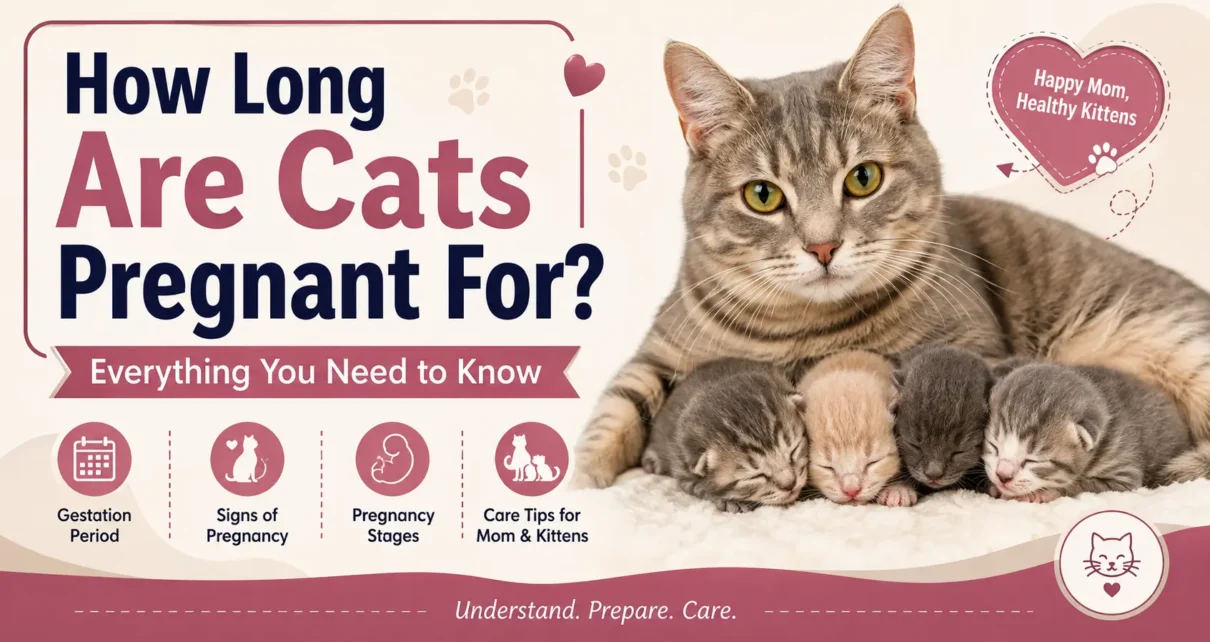
My neighbor once called me in a mild panic because her cat, Momo, had gone from “maybe a little chubby” to “unmistakably pregnant” in what felt like two weeks flat. Her first question was the same one almost every new cat owner asks: how long is a cat pregnant, exactly? Is it weeks? Months? Should she be worried it’s happening so fast?
Here’s the short answer, right up front, because you probably don’t want to scroll through six paragraphs of fluff to get it: cats are pregnant for about 63 to 65 days, roughly 9 weeks, give or take a few days. That’s it. Now let’s get into the details that actually matter — because “about two months” doesn’t tell you much when your cat is sitting in front of you looking increasingly round.
The Real Answer: How Long Do Cats Stay Pregnant?
Most veterinary sources put feline gestation at 63 to 67 days, with 63-65 days being the most common range. Some breeds run a touch longer or shorter, and first-time mothers can sometimes deliver a day or two off the average — but nine weeks is a solid rule of thumb to keep in your head.
Compare that to dogs (around 63 days too, interestingly) or humans (about 280 days), and cats are quick. A cat can go from “just got pregnant” to “nursing a litter” faster than most people finish a home renovation project. That short window is exactly why so many owners get caught off guard — you blink, and suddenly there are kittens.
One thing worth knowing: unlike humans, cats can experience something called superfecundation, where a single litter has kittens from more than one father. It doesn’t change the pregnancy length, but it’s a fun (and slightly wild) fact that explains why kittens in the same litter sometimes look nothing alike.
Week-by-Week: What’s Actually Happening
I won’t pretend every week looks dramatically different from the outside — a lot of early pregnancy is invisible. But here’s a realistic breakdown of the cat pregnancy timeline.
Weeks 1-2: Nothing visible yet. Internally, fertilization and implantation are happening. Your cat might seem a little more affectionate or, oddly, a little more tired than usual.
Weeks 3-4: This is when “pinking up” happens — the nipples become noticeably pink and slightly enlarged. This is usually the first physical sign a vet or an experienced owner will point to. Mild appetite changes or occasional vomiting (yes, cats get something like morning sickness) can show up here too.
Weeks 5-6: The belly starts rounding out. Weight gain becomes obvious. By this stage, a vet can often feel the kittens through gentle palpation, though I’d never recommend trying this yourself — it’s easy to press too hard and cause harm.
Week 7: Nesting behavior kicks in. Your cat may start investigating closets, drawers, or that laundry basket you left out, looking for a quiet, enclosed spot to give birth. This is a good time to set up a proper birthing box if you haven’t already.
Weeks 8-9: The home stretch. Movement from the kittens may be visible through the belly. Appetite often drops slightly right before labor, and some cats become restless or unusually clingy in the final 24-48 hours.
Signs Your Cat Might Be Pregnant
If you’re not sure whether your cat is actually pregnant or just going through a weight fluctuation, here’s what tends to show up:
- Pink, enlarged nipples (usually the earliest clear sign)
- Increased appetite after the first few weeks
- Weight gain concentrated around the abdomen
- A rounder, firmer belly by week 5 or 6
- Nesting behavior in the final weeks
- Occasional vomiting or reduced appetite in early pregnancy
None of these are 100% conclusive on their own. Weight gain alone could mean a dozen things. The only way to confirm pregnancy with real certainty is a vet visit — ultrasound can detect pregnancy as early as day 15-20, and an X-ray later on can even give you a rough kitten count.
How Many Kittens, and Does That Affect the Timeline?
Litter size doesn’t really change how long the pregnancy lasts, but it’s worth mentioning since it’s the next question most owners have. Average litters run 3 to 5 kittens, though anywhere from 1 to 8 isn’t unusual. Larger litters sometimes arrive a day or two earlier than smaller ones, simply because there’s less room to spare, but this isn’t a hard rule.
What Cat Owners Get Wrong
A few misconceptions come up again and again, so let’s clear them up:
“My cat is still nursing, so she can’t get pregnant again.” Unfortunately, this isn’t true. Cats can go into heat and get pregnant again while still nursing a previous litter. It’s exhausting for the mother and genuinely one of the reasons vets push spaying so hard.
“Indoor cats can’t get pregnant.” They absolutely can, if there’s an unneutered male in the house, or if she gets outside even once during heat. I’ve heard from more than one owner who assumed their cat was “safe” indoors, only to be surprised weeks later.
“Pregnancy always looks obvious.” Not really, especially in cats with longer or fluffier coats. Some pregnancies aren’t noticed until week 6 or 7, simply because the changes are subtle at first.
Caring for a Pregnant Cat
You don’t need to overhaul your entire routine, but a few practical steps help:
- Switch to kitten food gradually around week 4-5. It’s calorie-dense and supports the extra nutritional demand.
- Keep vet visits on schedule. An early check confirms pregnancy and rules out complications; a later one can estimate litter size.
- Set up a quiet birthing space by week 6-7 — a low-sided box, lined with soft towels, placed somewhere calm and away from foot traffic.
- Avoid unnecessary medications or flea treatments not cleared by your vet, since some aren’t safe during pregnancy.
- Don’t restrict movement. Pregnant cats generally know their own limits and will naturally slow down as needed.
To be fair, most healthy cats sail through pregnancy without major issues. But complications like dystocia (difficult labor) do happen, particularly in very young mothers, older cats, or certain flat-faced breeds. If your cat is straining for more than an hour without producing a kitten, or seems to be in distress, that’s a same-day vet call, not a wait-and-see situation.
When Should You Expect Labor?
Once you hit day 60, start paying closer attention. Signs that labor is near include:
- A noticeable drop in body temperature (below 100°F / 37.8°C)
- Restlessness, pacing, or repeated visits to the nesting box
- Loss of appetite in the final 24 hours
- Visible contractions or vocalizing
Labor itself typically lasts a few hours, with kittens arriving roughly 30-60 minutes apart, though this varies quite a bit litter to litter.
Final Thoughts
So, to circle back to the original question — how long are cats pregnant for? About 63 to 65 days, or roughly nine weeks. It’s a short window compared to most mammals, which is exactly why it catches so many owners by surprise. If you suspect your cat might be pregnant, don’t just wait it out — a quick vet visit will confirm it and set you both up for a smoother nine weeks ahead.
And if you’re not planning to breed your cat intentionally, this is usually the point where vets gently bring up spaying. It’s not a lecture, just a genuinely useful conversation to have before “maybe” turns into “definitely.”
Frequently Asked Questions
1. How long are cats pregnant for on average?
About 63 to 65 days, or roughly 9 weeks, from conception to birth.
2. How long is a cat pregnant compared to a dog?
Very similar — both average around 63 days, though individual cases vary by a few days either way.
3. Can a cat’s pregnancy last longer than 67 days?
It’s uncommon. If a cat goes past 70 days without labor, contact a vet, since this can signal complications.
4. How can I tell if my cat is pregnant early on?
Pink, swollen nipples around week 3-4 are usually the first visible clue, though a vet ultrasound can confirm it as early as day 15-20.
5. How many times can a cat get pregnant in a year?
Cats can have up to 2-3 litters per year if unspayed, since they can go back into heat shortly after giving birth.
6. Does a cat’s belly get pregnant-looking right away?
No, visible rounding usually starts around week 5-6, not immediately.
7. Is it safe for a pregnant cat to still be active?
Yes, moderate activity is fine and normal. She’ll naturally slow down as the pregnancy progresses.
8. What should I feed a pregnant cat?
A gradual switch to kitten food around week 4-5 is generally recommended, since it’s higher in calories and protein.
9. How long after mating does a cat show signs of pregnancy?
Physical signs typically appear around 3 weeks after mating, though it varies by cat.
10. Can indoor-only cats get pregnant?
Yes, if there’s an unneutered male cat in the home or she has any outdoor access during heat.
11. How long is a cat pregnant before I should prepare a birthing box?
Start setting one up by week 6-7, giving her time to get comfortable with it before labor.
12. Do first-time mother cats have longer pregnancies?
Not significantly — the gestation length stays roughly the same, though first labors can sometimes take a bit longer.
13. How long does actual labor take, separate from pregnancy?
Labor itself usually lasts a few hours, with kittens born roughly 30-60 minutes apart.
14. Can a cat get pregnant again while nursing?
Yes, which is a major reason vets recommend spaying rather than waiting.
15. What’s the earliest a vet can confirm cat pregnancy?
Ultrasound can often detect pregnancy around day 15-20 after mating.