Why I Still Get Asked “But Are You Really Spanish?”
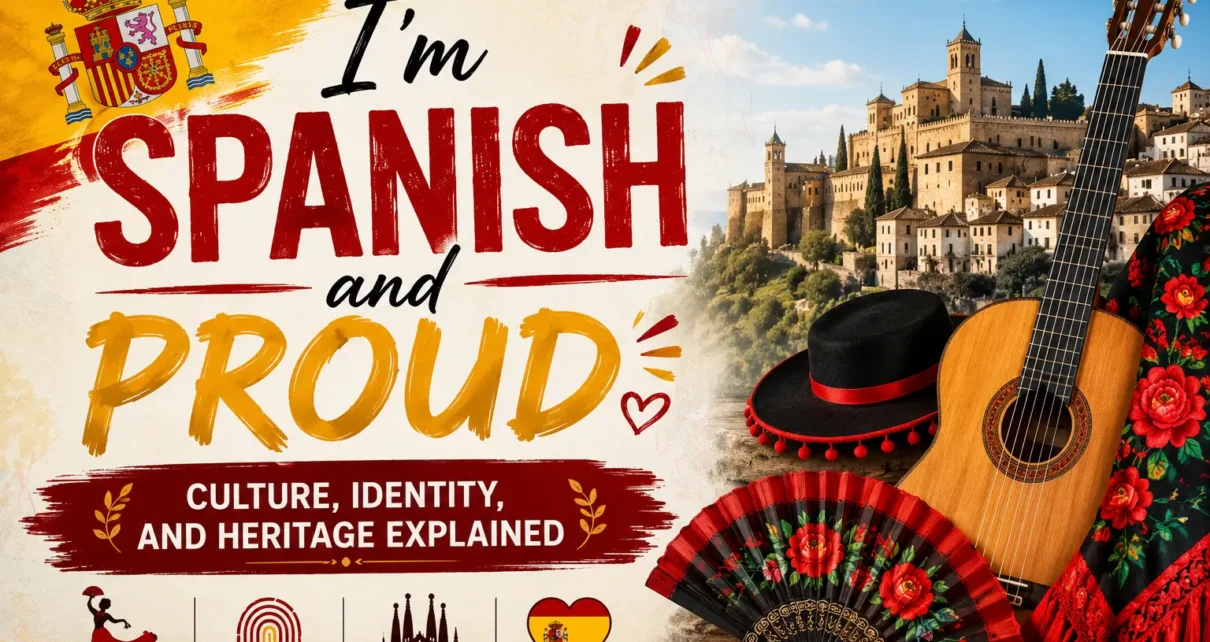
I’ve lived half my life explaining where I’m from. My mother’s from Málaga, my father grew up outside Madrid, and I was raised bouncing between both cities before my family settled abroad. When people hear my accent, they assume Mexican. When they see my last name, they guess Italian. So I’ve learned to just say it plainly: I’m Spanish. Not Latino, not Hispanic-in-the-American-sense, just Spanish — from Spain, with all the regional mess that label actually contains.
That mess is the fun part, honestly. And there’s no better way into it than through language itself. So let’s do something a little different here. Instead of another generic “10 facts about Spain” listicle, I want to walk you through Spanish identity using one small, oddly specific lens: words that start with the letter M. Places, adjectives, everyday vocabulary — the letter M turns out to be a surprisingly good tour guide through Spanish culture.
If you searched for spanish words that start with m hoping for a vocabulary list, you’ll get one. But you’ll also get the “why it matters” that most word lists skip entirely.
Quick Answer: Common Spanish Words That Start With M
If you’re short on time, here’s the direct answer. These are everyday m spanish words you’ll actually hear in conversation, not textbook filler:
- Madre – mother
- Mañana – tomorrow / morning
- Mesa – table
- Mano – hand
- Mundo – world
- Miedo – fear
- Mercado – market
- Mentira – lie
- Maleta – suitcase
- Museo – museum
I still remember learning mercado not from a classroom but from my grandmother dragging me through one in Málaga every Saturday morning, complaining about the price of fish. That’s the thing about words that start with m in spanish — half of them you’ll pick up from real life faster than from any app.
Places in Spain Starting With M (And What They’re Actually Like)
This is where people searching for places in spain starting with m usually want more than a Wikipedia summary, so here’s my honest take on a few:
Madrid
Everyone expects this one. It’s the capital, sure, but what surprises visitors is how walkable it is compared to sprawling cities like London or Mexico City. The Retiro Park on a Sunday afternoon feels like the whole city agreed to relax at once.
Málaga
My mother’s city, and I’m biased, but Málaga has quietly become one of Spain’s most livable coastal cities. It’s not just beaches — the Picasso Museum sits a five-minute walk from tapas bars that haven’t changed their menu in forty years, and that’s a compliment.
Mallorca
Technically an island, part of the Balearic Islands, and often mistaken for a party-only destination. The interior — Sóller, the Tramuntana mountains — is nothing like the beach clubs in Palma.
Murcia
Underrated. Fewer tourists, cheaper cost of living, and some of the best rice dishes in the country outside Valencia. Locals will argue their paella rivals Valencia’s, and honestly, sometimes it does.
Mérida
If you care about Roman history, Mérida has one of the best-preserved Roman theatres in Europe, and it barely makes anyone’s Spain bucket list. That’s part of its charm.
Adjectives in Spanish That Start With M — Describing People and Places
Here’s where the language gets personal. Adjectives in spanish that start with m are useful because they cover both how Spaniards describe themselves and how outsiders often describe Spain:
| Adjective | Meaning | Common Use |
|---|---|---|
| Maravilloso/a | Wonderful | Describing places, experiences |
| Moderno/a | Modern | Cities, architecture |
| Modesto/a | Modest | Personality trait |
| Mayor | Older / elder | Family, age |
| Molesto/a | Annoying / bothered | Everyday complaints |
| Malo/a | Bad | Weather, food, mood |
| Musical | Musical | Culture, flamenco talk |
| Misterioso/a | Mysterious | History, old towns |
A small note here, because textbooks rarely mention it: mayor doesn’t just mean “older” — it’s also how Spaniards refer to elderly relatives respectfully, as in “mi abuela es mayor” (my grandmother is elderly). Context changes meaning constantly in Spanish, which is something no flashcard app fully teaches you.
Why Learning M Words Actually Teaches You Spanish Culture
Here’s my honest opinion, and it might be a little controversial among language teachers: memorizing vocabulary lists alphabetically is a decent starting habit, but it’s a terrible long-term strategy. What actually sticks is context.
Take mantel (tablecloth) and merienda (afternoon snack). Neither word matters much on its own. But put them together — a grandmother laying out a tablecloth for the 6 PM merienda, a ritual most Spanish households still hold onto — and suddenly you understand something about how meals structure daily life in Spain differently than in, say, the U.S. or U.K.
That’s the honest limitation of any spanish words that start with an m list, including this one: words alone don’t teach culture. They’re doorways. You still have to walk through them — visit, listen, get corrected by an annoyed waiter, mess up the subjunctive in front of your in-laws.
A Practical Tip From Someone Who Learned This the Hard Way
If you’re studying m spanish vocabulary for a trip or a class, don’t just drill the list. Pick five words, then build one sentence for each that’s actually true about your own life. “Mi madre vive en Murcia” sticks better than “la madre vive en la casa” from a textbook, because it’s yours. I still remember words this way twenty years later — the boring, textbook-perfect sentences I’ve completely forgotten.
Where Spanish Identity Actually Comes From
Being Spanish isn’t just flamenco, bullfighting, and paella — honestly, most Spaniards I know have never even seen a bullfight live, and paella is regional, not national (ask anyone from the Basque Country). Identity here is messier and more regional than outsiders assume. A Catalan, a Galician, and an Andalusian will all say “soy español” but mean three different cultural experiences by it — different food, sometimes different first languages, different histories with the central government in Madrid.
That regional pride is real, and it’s worth respecting rather than flattening into one postcard image. If there’s one thing I’d want a reader to take from this article, it’s that.
Frequently Asked Questions
1. What are some common Spanish words that start with M?
Common ones include madre (mother), mañana (tomorrow), mesa (table), mano (hand), and mundo (world). These are used daily in conversation, not just textbooks.
2. What is a good M word to start learning Spanish with?
Mañana is a great starting word since it means both “tomorrow” and “morning,” and it appears constantly in everyday speech.
3. Are there Spanish adjectives that start with M?
Yes — common ones include maravilloso (wonderful), moderno (modern), modesto (modest), and malo (bad).
4. What Spanish cities or places start with M?
Madrid, Málaga, Mallorca, Murcia, and Mérida are among the most well-known places in Spain starting with M.
5. Is Málaga worth visiting compared to Madrid?
They’re different experiences — Madrid offers capital-city energy and museums, while Málaga offers coastal life, Picasso’s birthplace, and a slower pace.
6. What does “mercado” mean in Spanish?
Mercado means “market,” typically referring to a local food or produce market rather than a large supermarket.
7. How many Spanish words start with the letter M?
Thousands, since M is a common starting letter in Spanish. This article covers practical, everyday examples rather than an exhaustive dictionary list.
8. Is “mayor” the same as “older” in Spanish?
Mostly yes, but mayor is also commonly used respectfully to describe elderly people, especially family members.
9. What’s the difference between Spanish and Latino identity?
Spanish refers to people from Spain; Latino generally refers to people from Latin America. The cultures, history, and even Spanish dialects differ significantly.
10. Do all Spaniards speak the same Spanish?
No. Regional accents and even co-official languages (Catalan, Basque, Galician) vary widely across Spain.
11. What is a “merienda” in Spanish culture?
It’s a light afternoon snack, often taken around 5–6 PM, and it’s a common daily ritual in many Spanish households.
12. Why is regional identity so important in Spain?
Spain is made up of autonomous communities with distinct histories, languages, and traditions, so regional identity often matters as much as national identity.
13. What’s a good way to memorize Spanish vocabulary long-term?
Build personal sentences using the words instead of memorizing isolated definitions — it creates stronger, longer-lasting memory associations.
14. Is paella a national Spanish dish?
Not exactly — it originated in the Valencia region and is considered regional, though it’s widely recognized internationally as a symbol of Spain.
15. What is Mérida known for?
Mérida is known for having one of the best-preserved ancient Roman theatres in Europe, despite being relatively overlooked by tourists.