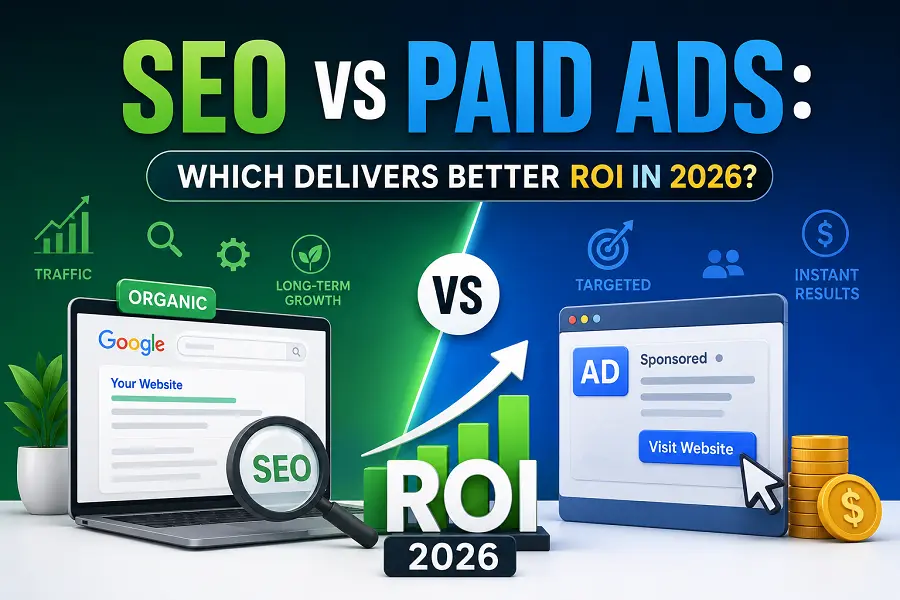
Choosing between SEO and paid advertising remains one of the biggest marketing decisions for businesses in 2026. Both strategies can increase traffic, generate leads, and improve sales, but they deliver results in different ways. The right choice depends on your goals, budget, competition, and expected timeline. Understanding how each channel performs helps you invest in marketing that produces measurable and sustainable returns.
SEO vs Paid Ads: Understanding the Core Differences
Search Engine Optimization (SEO) focuses on improving your website’s visibility in organic search results. Instead of paying for every visitor, you earn traffic by creating valuable content, improving website performance, and building authority over time.
Paid ads, on the other hand, place your business in front of potential customers almost immediately. You pay each time someone clicks your advertisement or performs another desired action.
Key differences include:
- SEO builds long-term organic traffic and brand authority.
- Paid ads generate instant visibility for targeted audiences.
- SEO requires consistent optimization rather than ongoing click payments.
- Paid advertising allows precise audience targeting and campaign control.
- Organic rankings often improve customer trust and credibility.
- Paid campaigns are ideal for promotions, product launches, and seasonal offers.
Which Strategy Delivers Better ROI in 2026?
The answer depends on your business objectives rather than a single universal winner.
1. Long-Term Business Growth
SEO generally produces stronger long-term return on investment because quality content can continue attracting visitors long after it is published. As rankings improve, customer acquisition costs often decrease while organic traffic keeps growing.
2. Immediate Lead Generation
Paid advertising is usually the better option when businesses need quick results. New websites, limited-time offers, or event promotions can benefit from instant traffic while waiting for SEO efforts to mature.
3. Budget Efficiency
- SEO requires upfront investment in content, technical improvements, and optimization.
- Paid ads demand continuous spending to maintain visibility.
- Once ad budgets stop, traffic usually declines immediately.
- Strong SEO can continue generating leads without paying for every click.
4. Competitive Markets
Highly competitive industries often require both strategies. Paid campaigns help businesses gain visibility quickly, while SEO gradually builds lasting authority that reduces dependence on advertising.
The Best Approach Is Combining SEO and Paid Ads
Businesses achieving the highest marketing ROI in 2026 rarely rely on only one channel. Instead, they integrate SEO with paid advertising to maximize performance.
A balanced strategy can include:
- Using paid ads to test high-converting keywords before expanding SEO content.
- Creating SEO articles that answer customer questions throughout the buying journey.
- Retargeting organic visitors through paid campaigns.
- Using SEO to reduce long-term customer acquisition costs.
- Investing more heavily in the channel producing the strongest conversions over time.
This combination provides both immediate traffic and sustainable growth while reducing marketing risk.
Conclusion
SEO and paid advertising serve different purposes, making them complementary rather than competing strategies. SEO offers lasting value, stronger credibility, and lower long-term acquisition costs. Paid ads provide speed, flexibility, and precise targeting when immediate results matter. Businesses focused on sustainable growth should prioritize SEO while using paid advertising strategically to accelerate campaigns, capture demand, and support business objectives. The strongest ROI in 2026 often comes from using both channels together with clear measurement and continuous optimization.
FAQs
1. Is SEO better than paid ads for small businesses?
SEO is often more cost-effective for long-term growth, while paid ads help small businesses generate leads quickly when immediate visibility is needed.
2. How long does SEO take to show results?
Most businesses begin seeing meaningful improvements within several months, although timing depends on competition, website quality, and content consistency.
3. When should businesses choose paid advertising?
Paid advertising works best for product launches, seasonal promotions, local campaigns, and situations where immediate traffic is essential.
4. Can SEO reduce advertising costs?
Yes. Strong organic rankings can increase qualified traffic, helping businesses rely less on paid clicks over time.
5. Should businesses invest in both SEO and paid ads?
For many organizations, combining SEO with paid advertising creates the most balanced marketing strategy by delivering immediate visibility alongside sustainable long-term growth.