A digital marketing funnel is the path potential customers follow from discovering your brand to becoming loyal buyers. Instead of expecting visitors to purchase immediately, the funnel helps businesses deliver the right message at the right stage. Understanding this process allows beginners to create smarter marketing campaigns, improve customer experience, and increase conversions without wasting time or budget.
What Is a Digital Marketing Funnel?
A digital marketing funnel represents the customer journey from the first interaction with a business to repeat purchases and brand advocacy. Every stage has a different goal, requiring specific marketing strategies and content.
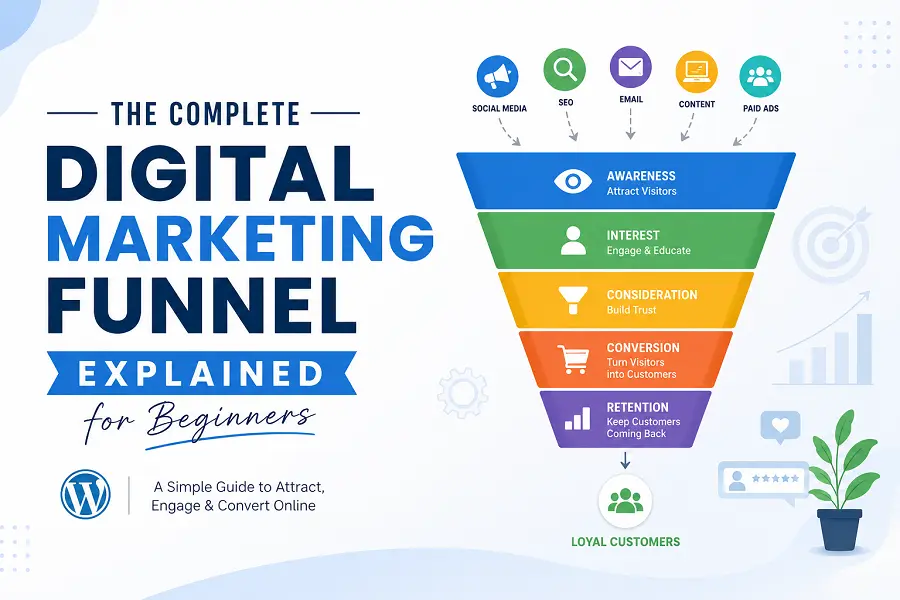
The funnel typically includes:
- Awareness: People discover your brand through search engines, social media, blogs, videos, or advertisements.
- Interest: Visitors begin exploring your products, services, or educational content.
- Consideration: Prospects compare your solution with competitors and evaluate reviews, pricing, and features.
- Conversion: The customer completes a desired action such as making a purchase, requesting a quote, or signing up.
- Retention: Existing customers receive support, updates, and valuable content to encourage repeat business.
- Advocacy: Satisfied customers recommend your brand through reviews, referrals, or social sharing.
Each stage moves users closer to becoming long-term customers rather than one-time buyers.
How to Build an Effective Digital Marketing Funnel
Creating a successful funnel requires matching your marketing efforts with customer intent.
-
Understand Your Audience
Identify your ideal customers, their challenges, goals, and preferred online platforms. Knowing who you serve makes every marketing decision more effective.
-
Attract Qualified Traffic
Use SEO, content marketing, social media, paid advertising, email campaigns, and video marketing to reach people actively looking for solutions.
-
Offer Valuable Content
Educational articles, guides, webinars, videos, and downloadable resources help build trust before asking for a sale.
-
Capture Leads
Encourage visitors to subscribe to newsletters, download resources, or request consultations using clear calls to action and simple forms.
-
Nurture Relationships
Continue communicating through personalized emails, helpful content, and timely follow-ups that answer common questions and remove buying hesitation.
-
Optimize for Conversions
Improve landing pages, simplify checkout processes, highlight customer benefits, and test different headlines or calls to action to increase conversion rates.
-
Retain Existing Customers
Continue providing value after the purchase through excellent customer service, exclusive offers, loyalty programs, and educational updates.
Common Mistakes Beginners Should Avoid
Many businesses struggle because they focus only on attracting traffic instead of guiding visitors through the complete customer journey.
Avoid these common mistakes:
- Ignoring customer intent at different funnel stages.
- Sending every visitor directly to a sales page.
- Publishing content without a clear objective.
- Neglecting email marketing and lead nurturing.
- Using inconsistent messaging across channels.
- Failing to measure performance with analytics.
- Forgetting existing customers while chasing new ones.
A well-managed funnel continuously evolves. Reviewing customer behavior and making gradual improvements often produces better results than major redesigns.
Conclusion
A digital marketing funnel gives structure to your marketing strategy by guiding potential customers from awareness to long-term loyalty. Beginners who understand each stage can create more relevant content, improve engagement, and increase conversions with greater consistency. Rather than treating every visitor the same, focus on delivering the right information at the right moment. Over time, this approach builds stronger customer relationships and sustainable business growth.
FAQs
1. Why is a digital marketing funnel important?
It helps businesses understand customer behavior, deliver targeted content, improve conversions, and build lasting customer relationships.
2. What is the first stage of a digital marketing funnel?
The first stage is awareness, where potential customers discover your business through channels like search engines, social media, or online advertising.
3. Can small businesses benefit from a digital marketing funnel?
Yes. A structured funnel helps small businesses attract qualified leads, nurture prospects, and maximize marketing budgets more effectively.
4. How do I know if my marketing funnel is working?
Track metrics such as website traffic, lead generation, email engagement, conversion rates, customer retention, and repeat purchases to evaluate performance.
5. How often should a digital marketing funnel be updated?
Review your funnel regularly based on customer behavior, campaign performance, market trends, and business goals to keep it effective.