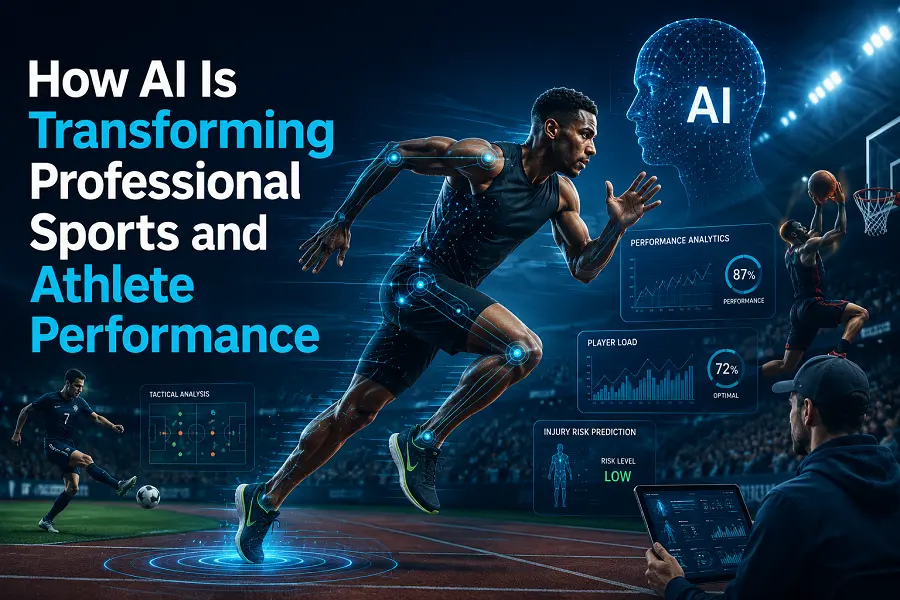
Artificial intelligence (AI) is changing the way professional sports are played, coached, and managed. From analyzing player movements to predicting injuries, AI helps teams make smarter decisions based on real-time data rather than guesswork. Athletes also benefit from personalized training plans that improve performance while reducing physical strain. As AI technology becomes more advanced, it is shaping every stage of an athlete’s journey, from practice sessions to championship competitions.
How AI Improves Training and Performance Analysis
AI-powered systems collect and process massive amounts of performance data during training and matches. Coaches can identify strengths, weaknesses, and patterns that would be difficult to notice through traditional observation alone.
Key benefits include:
- Tracking speed, acceleration, and endurance in real time.
- Monitoring movement efficiency and body mechanics.
- Creating personalized training programs for individual athletes.
- Comparing current performance with historical data.
- Identifying technical flaws before they affect results.
- Providing instant feedback after workouts or competitions.
Instead of following a one-size-fits-all training routine, athletes receive recommendations tailored to their physical condition, playing style, and performance goals. This makes practice sessions more productive and helps maximize long-term development.
AI’s Role in Injury Prevention and Game Strategy
AI is becoming an essential tool for protecting athletes from injuries while helping teams prepare more effectively for competition.
1. Predicting Injury Risks
AI analyzes workload, recovery time, movement patterns, and fatigue levels to detect warning signs before injuries occur. Coaches can adjust training intensity when the system identifies elevated risk.
2. Improving Recovery Plans
Rehabilitation programs become more accurate by monitoring healing progress daily. AI recommends gradual workload increases instead of relying on fixed recovery timelines.
3. Opponent Analysis
AI studies previous matches to uncover tactical trends, preferred formations, and common scoring opportunities. Coaches use these insights to create game plans that match upcoming opponents.
4. In-Game Decision Support
During competitions, AI processes live statistics, helping coaching staff evaluate substitutions, defensive adjustments, and offensive strategies based on changing match conditions.
5. Smarter Talent Evaluation
Teams increasingly use AI to evaluate player potential by combining technical skills, consistency, physical performance, and long-term development indicators. This supports more informed recruitment decisions.
The Future of AI in Professional Sports
AI will continue expanding beyond performance tracking into nearly every aspect of professional sports. Wearable technology is becoming more accurate, providing continuous health monitoring throughout training and competition. Virtual simulations allow athletes to practice game scenarios without physical fatigue, while intelligent video analysis delivers immediate tactical feedback after every session.
Sports organizations are also using AI to improve scheduling, travel planning, fan engagement, and operational efficiency. However, successful teams understand that AI complements human expertise rather than replacing experienced coaches, trainers, or medical professionals. The best results come from combining data-driven insights with professional judgment and athlete experience.
Conclusion
Artificial intelligence has become a valuable partner in professional sports by improving training quality, reducing injury risks, enhancing tactical planning, and supporting smarter decision-making. Athletes receive more personalized coaching, while teams gain deeper insights that help maintain a competitive advantage. As AI technology continues to evolve, its influence on athlete performance and sports management will grow, making professional sports more efficient, strategic, and performance-focused.
FAQs
1. How does AI help professional athletes improve performance?
AI analyzes training data, movement patterns, fitness levels, and match performance to provide personalized recommendations that improve skills and overall athletic performance.
2. Can AI prevent sports injuries?
AI helps identify potential injury risks by monitoring workload, fatigue, recovery, and movement patterns, allowing coaches to adjust training before serious injuries develop.
3. How do coaches use AI during competitions?
Coaches use AI-generated insights to evaluate player performance, analyze opponents, plan strategies, and make informed decisions throughout a match.
4. Is AI replacing sports coaches?
No. AI supports coaches by providing detailed analysis and recommendations, but coaching decisions still rely on human experience, leadership, and communication.
5. Which sports benefit most from AI?
Football, basketball, cricket, tennis, baseball, athletics, cycling, swimming, and many other professional sports use AI for performance analysis, injury prevention, and tactical planning.